The most useful difference is texture and how the food is served. Compare both methods using real products from our Seville catalog.
What changes on the plate
Hot smoking combines smoke and heat during preparation, often giving a fragrant crust and juicy centre. Cold smoking adds aroma without the same cooking step and suits a firmer texture that can be sliced thinly. Neither method is automatically better; start with how you want to serve the food.
For a centrepiece
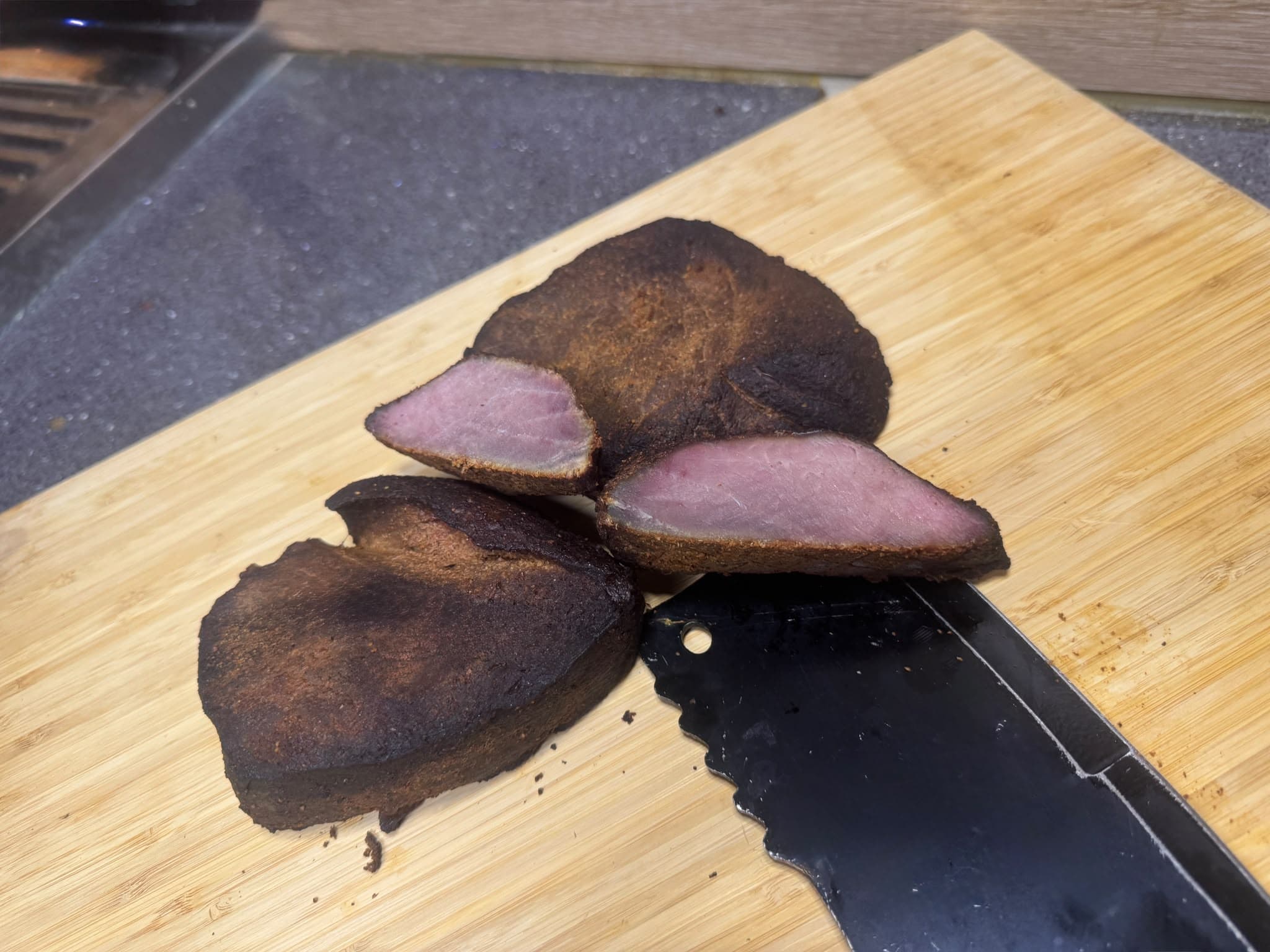
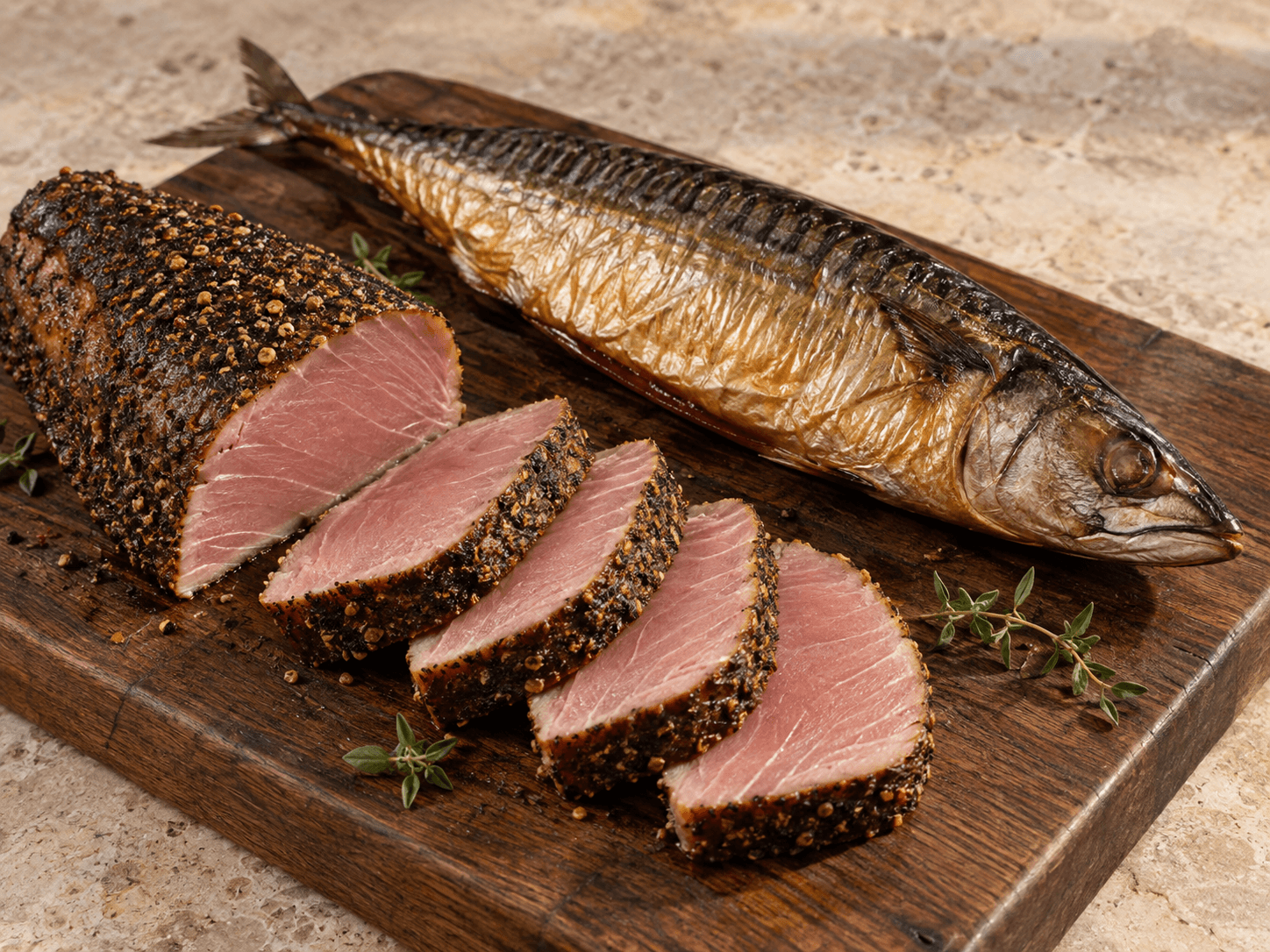
Our artisan smoked tuna has a rosy cut, firm texture and seasoned crust. The mackerel is served whole, with glossy skin and balanced smoke. Both work as a central dish cut into portions; compare pack size and weight on each product page before ordering.
For fine slices
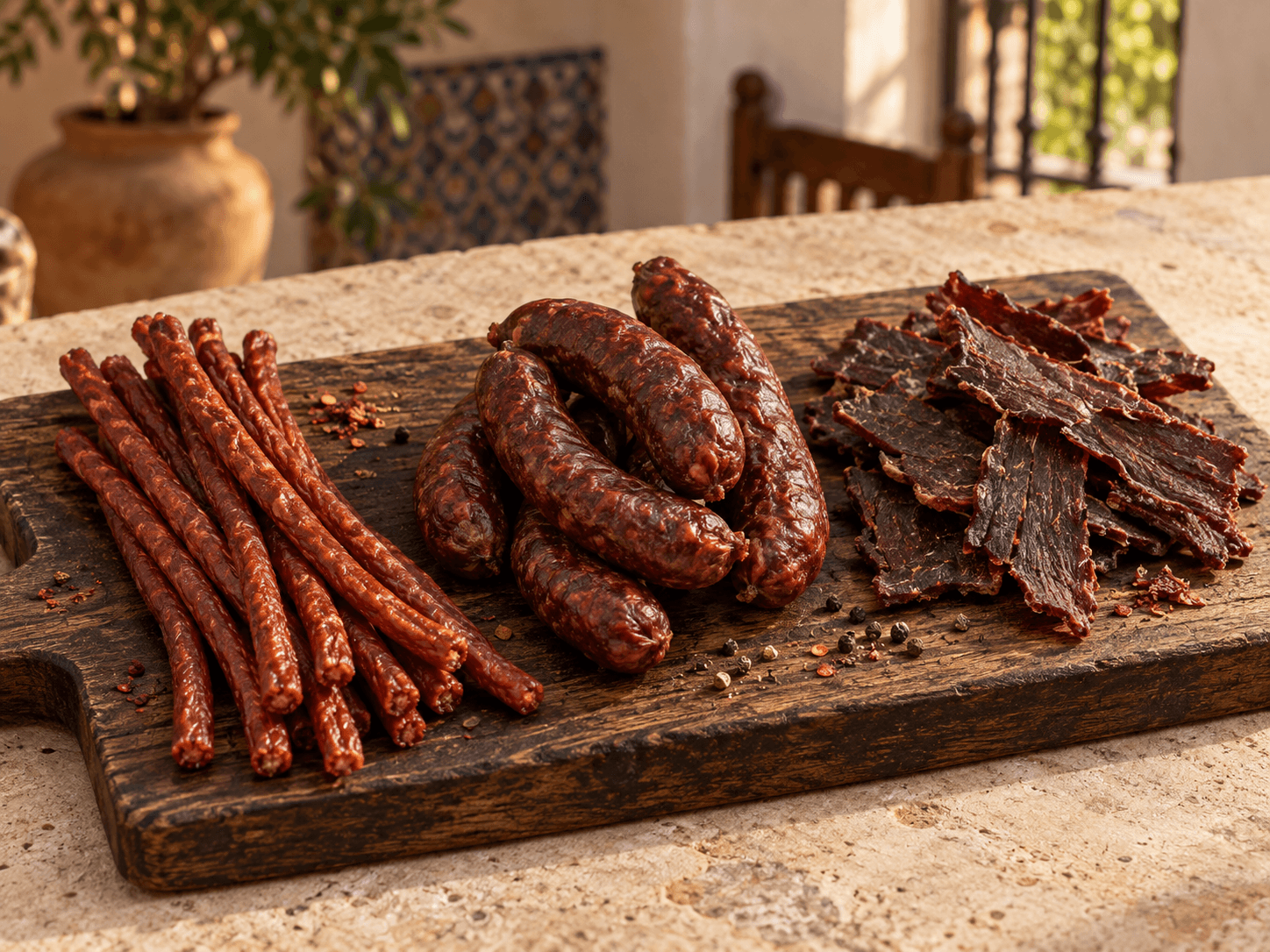
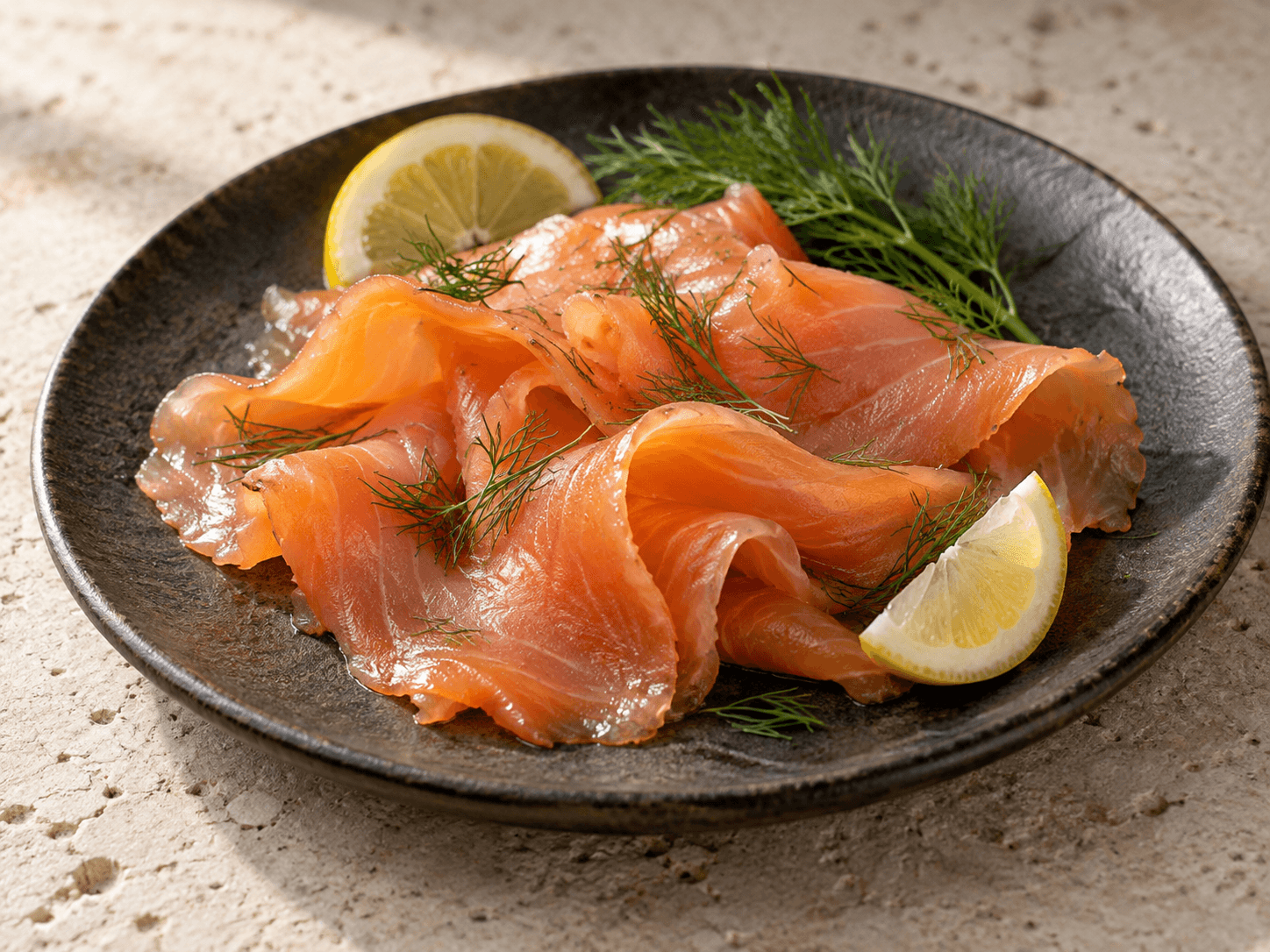
Our cold-smoked salmon is listed as fine slices with a silky texture and gentle smoke, suitable for toast or an appetiser board. For a drier, more concentrated bite, beef jerky and kabanosy belong to a different family: cured and dried products rather than cold-smoked fish.
Before you order
Check the method, ingredients, allergens, weight and batch availability on the product page. Smoking method does not replace storage instructions: always follow the product label. In Seville we confirm availability, delivery date and cost for your batch and address.
Technical source on smoking methods ↗